

CLICK HERE TO WATCH REY
CLICK HERE TO WATCH LUCIA
Throughout this whole month, the Thursdays of Chilean Cinema program is focusing on contemporary portraits of the political, outlining the various ways in which our filmmakers demonstrate that cinema is a place to come together and establish bridges of dialogue and transformation. This is what motivates us to look at the poetics of director Niles Atallah’s work: a Chilean-American filmmaker, screenwriter, video artist and cinematographer who positions himself from the avant-garde to cultivate a space of resistance. In each of his films, Atallah questions the line between reality and fiction through visual resources that generate new perspectives from which to observe and belong in the world. Today we invite you to discover the richness of his work with two of his films: the feature Rey, Tiger winner of the Special Jury Prize at the Rotterdam Festival in 2017, and Lucía, an experimental animated short from 2007.
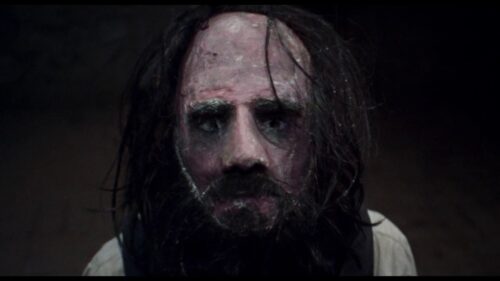
In Rey, Atallah's political standpoint is visible through his questioning of the past, in which he reimagines the historical consequences of the colonial violence that occurred in southern Chile. A dreamlike aesthetic takes charge of recovering and reinterpreting a Mapuche legend, through animation techniques, costumes, masks and archival images. The central character is Orélie-Antoine de Tounens, a French adventurer who supposedly was in alliance with the Mapuche people to found the independent kingdom of Araucanía and Patagonia. Little by little, the film reveals that the counterattack against the genocide can also be a discursive lens to confront the mass production canons of our filmmaking industry.
In an interview we conducted in 2017, Atallah told us: “I don't believe in the possibility of knowing who he was or what happened before. When something has already happened, and people have already died, the historical context changes, it seems to me that it is a mistake to look back and say let's see what really happened. I don't think it's possible to do that. Rey provokes that experience in the viewer, the experience that history and human life is a volatile, organic and changing process.”
Developed during seven years, the film was co-produced by Chile, France, Germany, the Netherlands and Qatar. In addition to its award in Rotterdam, it was exhibited in various spaces such as Cinélatino Rencontres de Toulouse and at FICUNAM, consolidating the provocative and authentic filmic voice of Atallah.
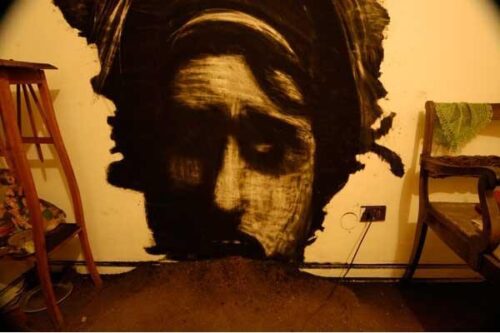
Another surprise that we have in this special edition of JCC is the short film Lucía (2010), the first part of the series of stop-motion animation shorts Lucía, Luis y el lobo. Co-directed together with Joaquin Cociña and Cristóbal León (La casa lobo), it was created frame by frame with a digital camera, using organic materials such as charcoal, flowers and cardboard. This dazzling work that lasts less than 4 minutes toured the screens of Vienna, Madrid, Berlin, San Francisco and Valdivia.
In 2007, Atallah co-founded the production house Diluvio, creating groundbreaking works that, from their material creation, question the status-quo. Currently, the director is developing several new projects: including Celestial Twins (Hubert Bal Fund, 2018), a new feature film that makes a fusion of cinema, video games and virtual reality, and where the pixel is divine and the algorithms have consciousness. He is also developing a short film called Animalia Paradoxa (Chilean Audiovisual Fund, 2020) which stars a human being who is in a stage of evolution towards another species. She is an androgenic mermaid who cannot breathe polluted air in a post-apocalyptic Santiago. This viewpoint is sure to make us question the historical year that we have been living as a society.
CLICK HERE TO WATCH REY
CLICK HERE TO WATCH LUCIA