
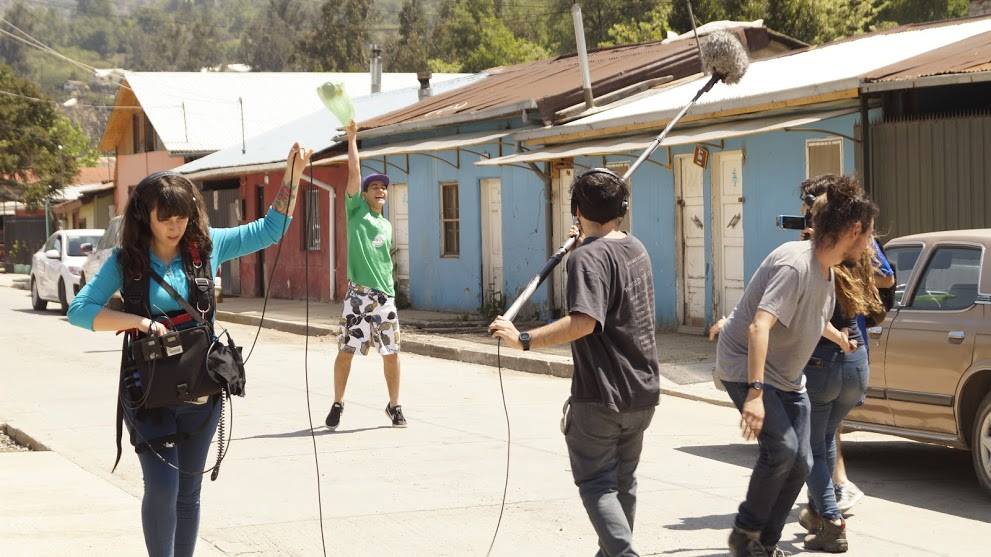
Cinema is made up of diverse professionals who are essential in constructing the worlds we admire so much. Although some types of labor take a more central role the moment they hit the screen, films wouldn’t be anything without the work of all the people behind the camera. An example is the development of sound atmospheres, an indispensable element for submerging ourselves in varied audiovisual universes. Chile has capacitated professionals with a range of experience in this area, and who are expanding the limits of the recent national film industry.
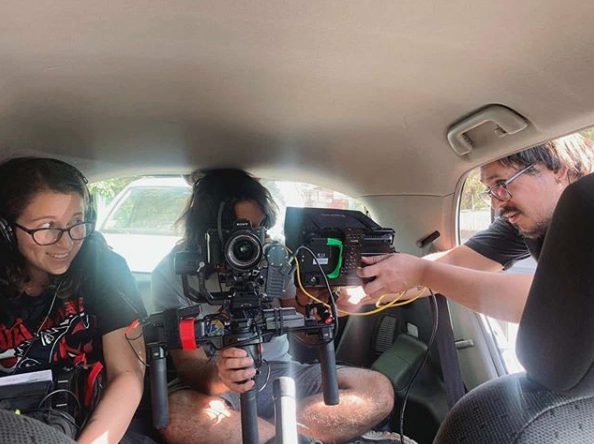
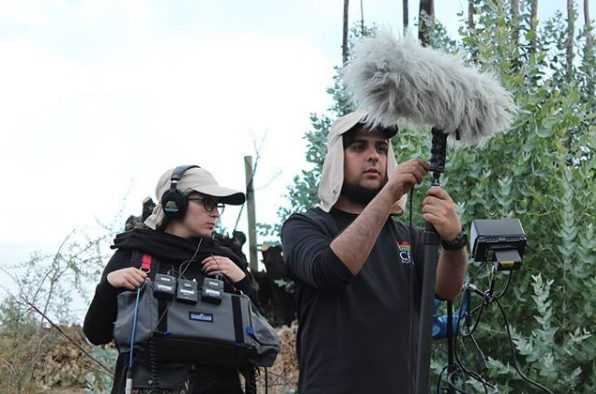
Camila Pruzzo is part of the team of professionals at CPM Sonido, a company that, according to its website, is dedicated to the realization of complete soundtracks, from on-location recording to the final mix, comprehensively covering the needs of each project through a personalized, artistically high-quality service for their clients.
How was your start in sound and what was the main motivation to dedicate yourself to it?
Honestly, when I was a third-year student at university, I still didn’t know what I wanted to dedicate myself to. It was the result of a fiction workshop exercise, which we did in collaboration with the university’s sound department, that I became interested in working in that area. I knew a bit about direct sound recording, and the guy I got paired with knew some sound editing and post-production. We joined forces and got along well, and since no one in cinema is very attracted to the sound area, I took advantage of that “vacancy” to learn.
How did CPM start and what kinds of films does it aim for? What other kinds of projects do you work with?
CPM Sonido was officially born in 2014 through a grant from SERCOTEC’s Seed Capital Program. The guy I mentioned in the prior answer and I supported one another on different projects during our studies, ultimately assisting … he assisted me on the post-production of my thesis.
From that point on we began to work together, but both as freelancers. He suggested forming a business, I wasn’t so sure to be honest. At university there was always an air of labor instability, but the majority of graduates formed production companies in order to apply for grants, among other things.
It was a risky decision, but it worked out. Our objective was precisely to work with graduates, thesis students, new production companies like us, to offer payment plans, student discounts, to facilitate their sound design from start to finish according to their production capacities. We began working from there, we’ve ventured through different film genres, from science fiction, as is the case with Noche by Inti Carrizo-Ortiz, to documentary and experimental films. We like challenges, even if it sounds cliché, but that keeps us active, creative, it makes us study more about sound and listen to new proposals that renew the way of doing sound design today.
How has the area evolved in Chile and how would you define the current emerging national industry? Where do you think its strengths are rooted and what would you say are its challenges today?
I don’t know if I’m capable of talking about its evolution because since I started studying 12 years ago, until today, we have continued to experience a very complex moment for the small national film industry. On the one hand, trying to exist, to have cinema and the arts in general be recognized as a contribution to culture, as a reflection of the multiple forms in which Chilean identity is represented; and on the other, trying to establish certain parameters, certain rules if you will, in order for everyone’s labor to be respected within the industry as well.
That is, trying within the medium as well as outside it, for it to be recognized, and valuing the work of each department, each creative professional, makes cinema ultimately a collective project. The strength that I see (and that we still hold onto) is the expressive and creative freedom, we can make work without the fear of a “major business” defining what cinema talks about, who directs it, etc.
For the moment, I think the challenges are dignifying the manual labor that we do as technicians and artists in cinema, strengthening spaces of collective work, such as unions, guilds, etc., in order to reduce the pay gaps and also to grant greater benefits to film industry workers.
What weaknesses did you observe in the audiovisual industry that drove you to found CPM?
I observed that the big sound production houses were part of another generation of film creatives and artists. I wanted to provide a space to those who still couldn’t get to those places, and destroy the myth that school films or films by small production companies “sound bad”. Many graduates seek to get their films into festivals, how could we not offer them the opportunity for the sound in their pieces to be as good as the image quality, screenplay, art direction, etc.
How do you take on each film project in order to design its sound?
I always ask for the script and a face-to-face meeting to find out who is behind the project. Get to know their references, ideas, where they want to get with it, what kind of genre we’re working with. Looking over the script, I always ask when there are notes about the sound, if there are none, I start to ask for the profiles of the characters and spaces. I start with the superficial to later move onto the details, everything that could work to search our own sound banks, or if it’s going to require particular recordings.
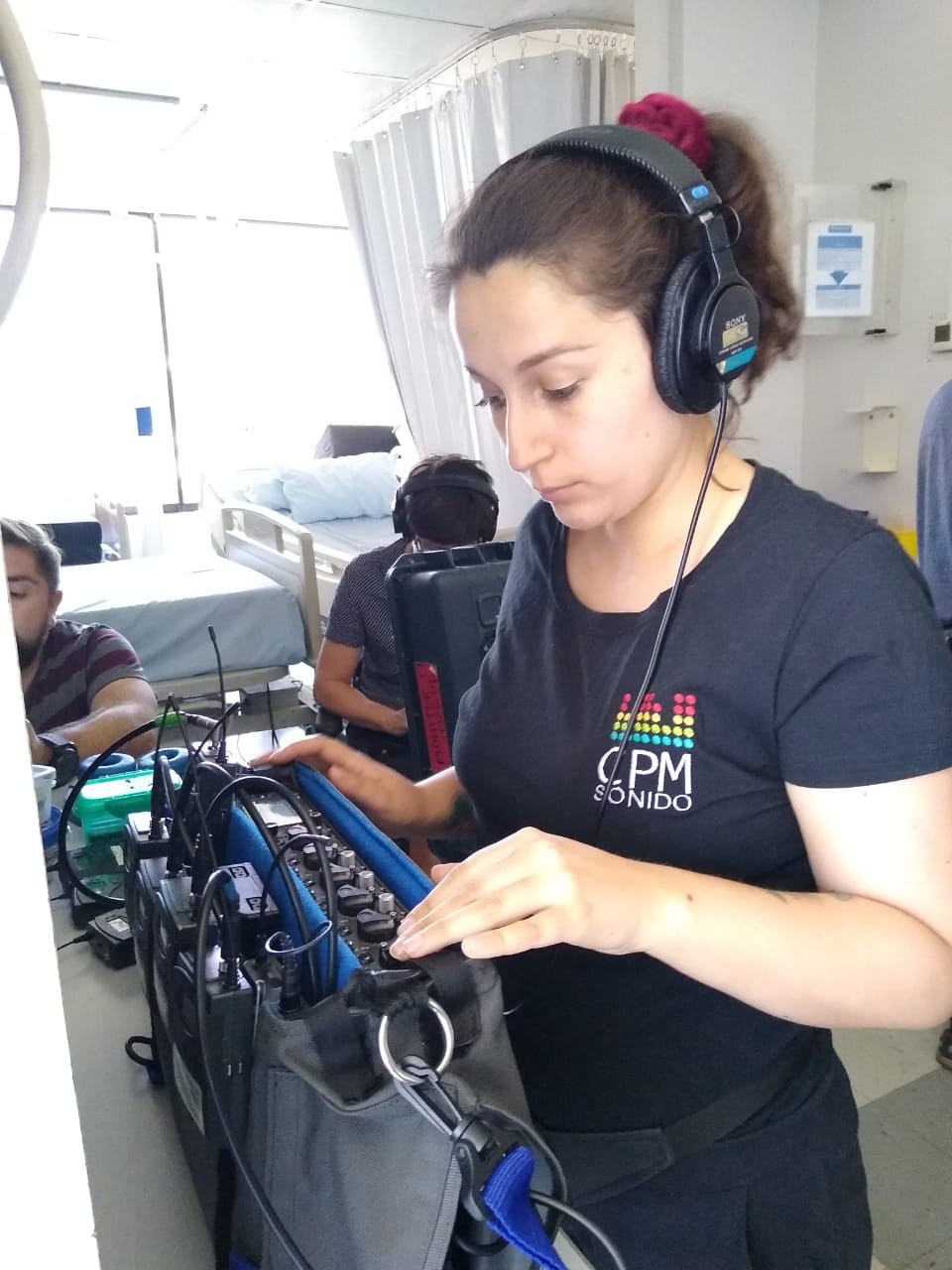
How has the role of the sound professional evolved for the film and audiovisual industry within a production?
At first I felt the role of the sound designer was a bit uncomfortable: there’s the myth that we’re a nitpicky, bad-humored area. And I understand. For a long time, the sound designer probably had fewer tools to do an impeccable recording, or productions lacked the will to give sound a space in their works. Currently, I feel as though that myth has begun to disappear bit by bit. Sound marks a notable difference between a quality piece and an amateur one. There’s something in Western culture, we’re beings who cling to vision, to the image; once the director learns to listen and value the potential of sound in their work, the role of the sound designer acquires the same weight as that of photography.
What do you enjoy most about being a sound designer and why?
Creating spaces out of atmospheres. I know it sounds absurd, or maybe it goes unnoticed, but I like to listen to the sounds in each place, build each element in layers that make a space unique, give a certain “temperature” to the scenes. It’s not the same constructing a sound ambience for an interior location in Downtown Santiago as a residential interior in another region. Making places communicate through the most simple elements is fun for me, it could be because I’m constantly traveling, for work and other matters.
Regarding the area in terms of genre, is it a space where women have been able to have influence? Do you consider yourself a pioneer in sound for film in Chile?
Yes, bit by bit, more women have begun to be recognized in this area. It’s not that they didn’t exist before, I think social media has helped a lot in giving a glimpse of female presence in the medium. No, I’m not a pioneer at all. I’m glad to know that there are many of us women working in the sound area, in recording as well as post-production, there are colleagues who have been doing it for a long time and they do an incredible job. Maybe in the [film] education area there are fewer women working, it’s difficult to dedicate oneself to both.
What projects are you working on currently?
Given the conditions of the pandemic, for the moment I’m only working on sound post-production. I’m about to finish the post-production of the web series Psicóticas Inseguras and beginning the design of another web series, documentary format.