
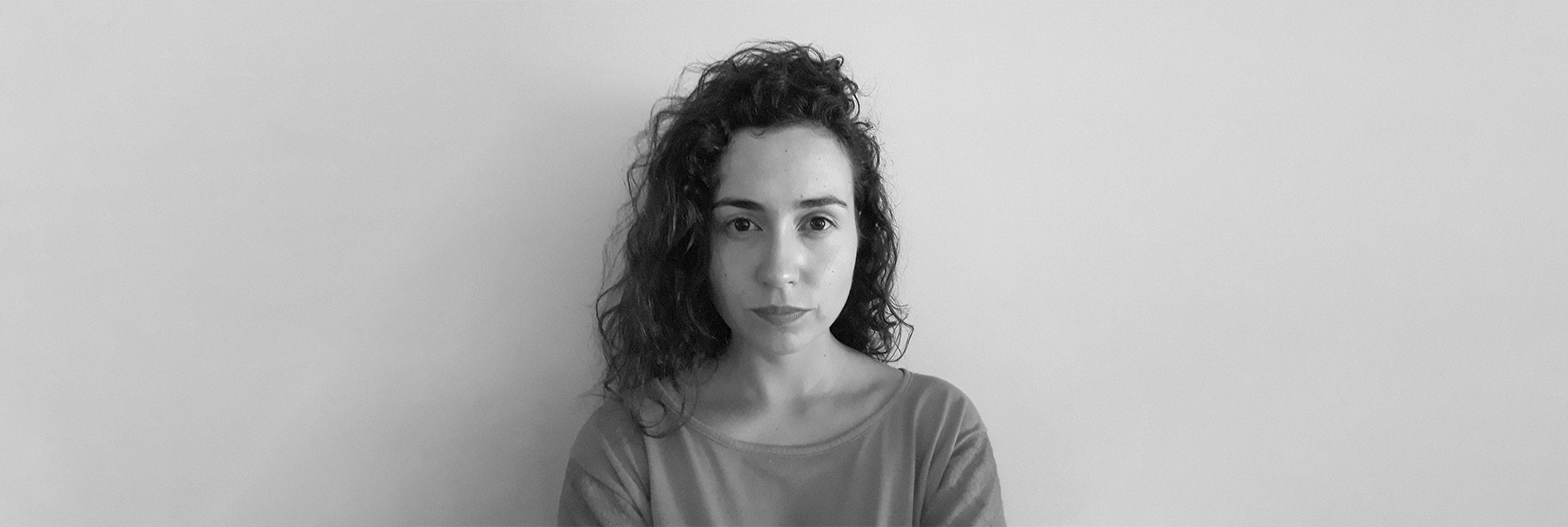
It’s public knowledge that in Chile, women lead the way as far as film editing is concerned. We boast talented representatives in this discipline who at a young age have come to earn national and international recognition for their labors. One of these professionals adding new titles to her filmography every day and currently working with young, renowned national talents is Valeria Hernández.
Hernández studied Audiovisual Direction and her film career has been fruitful, constructing fiction and documentary feature films and shorts, as well as doing work in advertising, music videos, and promotional pieces. She’s participated in important training instances such as Berlinale Talents at the Berlin Film Festival, and is the editor behind outstanding films such as Bad Influence (Mala Junta) by Claudia Huaiquimilla, The Man of the Future by Felipe Ríos, Enigma by Ignacio Juricic, and The Memory of Water by Matías Bize, among others.
From her home, the editor responds to this interview and tells us details about what her professional growth has been like, and certain keys that have taken her toward building a prolific career that has us full of expectation.
1.- When you find yourself in the first stage of a project, how do you approach the images you’ll be working with?
I normally enter projects before filming, so the first approach begins with the screenplay. Once the images exist, the first thing I do is to have a very conscious viewing of the material, not just to find out what I have to work with, but also because that will be “the only time” I’ll be closer to being a spectator and not part of the crew. Then, notes are taken, comments are shared with the director… everything very intuitively, hanging onto first impressions.
2.- How has your way of editing evolved since your short films at school up to the films you’ve done recently like “The Man of the Future”? What have your greatest lessons and challenges been?
I think evolution is marked by experience and the “flight hours” that one has. When I was starting out, sometimes I found it hard to find solutions and conclusions. You take the long route and get more tangled up in how to achieve what you want to achieve. With time, that process is more fluid and there’s more assertiveness in the execution of what you’re seeking to do (even though what you’re seeking still doesn’t necessarily work). The challenge there is also knowing that there’s no “universal way” of narrating, but rather each film should be unique, and you have to have put experience at the service of what’s new and original.
3.- “Some Beasts” premiered at San Sebastián, and the audience reaction was ferocious, it was highly applauded (including the Best Director award). What could you tell us about the editing process of that film, which is about to premiere?
That was co-edited with Jorge [Riquelme], the director. We’d already had a similar experience with “Camaleón”, and now there was the additional difficulty of him being outside of Chile for this stage. What was pleasing about co-editing was that we would surprise one another with our on-point decisions (almost from the perspective of a spectator), and that brought fresh ideas to the film.
I think what most defined that process was discovering the choral, parallel narrative that ultimately made it on screen. Once we began to deconstruct what was shot, the film picked up speed and the narrative “broke through”.

4.- In an interview with tapiz.org, you said that you “don’t attend shoots”. Is that because you prefer to have an objective view of the images? How does that begin to change your relationship with the material as you start watching it over and over again? Is it possible to maintain that “objectivity”?
Being away from the set allows you to maintain objectivity regarding the material. I always say that I believe all the “magic of cinema”, because unless someone from the crew tells me, I never realize when a location is a mix of several locations, or things like that; I also don’t know if a scene took a long time, or the contingencies of the shoot itself. All that distance helps in being a set of “uncontaminated” eyes that only see what’s on screen and not what’s behind it. What happens is that after looking at the material so much, you have to find ways to refresh your perspective: one is taking distance from the project for a couple of days, another is having viewings to feed off of other opinions.
5.- It’s interesting to reflect on the relationship between the intuitive and the narrative in editing. How do you think that relationship goes along establishing itself in the process of assembling projects?
I don’t know if it’s a relationship of “versus”. I think both are compasses that an editor should have well-calibrated and know when to resort more to one or the other. The assembly process requires a lot of sensibility in that sense, of knowing to guide oneself by intuition, but being (if the project requires) a “guardian of the narrative” as well. Mixing and balancing those two instincts is ultimately what gives the film shape.
6.- What are three principles for you in being a good editor?
I can think of several things, and, at the same time, it’s hard for me to decide on three. I think it’s a mix of being intuitive but patient; free but organized; and critical but constructive.
7.- You’ve worked on documentaries like “Los Castores” and fictions like “Enigma”. In addition to these two films, is it something that has begun to occur organically throughout your career?
Yes, although I generally tend toward fiction.

8.- Regarding the aforementioned, in the world of cinema, as time goes on, there is less of a need to attach genres to films. Do you think there’s a difference between editing a documentary and a fiction film?
I think there’s a difference in the editing processes and construction of the film. In general, fiction is very delimited to the screenplay and to a limited quantity of material (except for the wiggle room of shooting additional footage), and it’s constructed and proposed from that point. I’ve had to work on documentaries that follow that same line — of screenplay and limited material — and others that are still in search of a script as the editing takes place, and that continue to generate material during that process. In any event, when the work is already more put together, you give in to what a film is (which can include belonging to a genre), but it should defend itself on its own.
9.- What are the moments you consider most important in the relationship that is configured between a director and editor? Do you have to share a common point of view, or is it a mix between both points of views that creates an interesting work?
That relationship is like going on vacation with someone, and just like you do on a trip, there’s a prior moment of planning, getting to know one another, adaptation, etc. In that sense, I think the entire journey is important. I don’t know if there’s one moment more important than another.
As far as the point of view, as an editor I’m there to collaborate with a director on what they want to tell and how to materialize their perspective. That doesn’t mean there isn’t a constant dialogue between the two of us, which includes similarities and differences in opinion. That process without a doubt enriches the project. What’s important to me is knowing that the director and I are paddling toward the same objective, seeking ways to make the most interesting, attractive, and potent work that we can.
10.- And to finish: what are your goals or dreams as an editor? How do you foresee Chilean cinema’s path continuing in a few years?
Since we’re in pandemic mode and social uprising mode, it’s hard to think about career goals and immediate dreams. However, beyond the uncertainty of the moment, I hope to continue participating in interesting and original projects, in those where I feel I can contribute, but also that challenge me to continue learning.
Regarding Chilean cinema, I think there’s talent, there are stories, motivation, knowledge, but there are many difficulties in putting them into practice. In that sense, I see that its path (even more so as a result of the moment we’re in) really depends on having adequate conditions to continue growing and getting stronger, in order to continue to make films and series to add to the fruit that it has borne so far.