
The golden age of Chilean documentary continues with the world premiere of Gaucho Americano at Hot Docs. Directed by Nicolás Molina, the documentary competes in the International Spectrum section of the prestigious Canadian festival, one of the most important encounters for non-fiction film in the world.
On the heels of this major moment, which begins today, we took the opportunity to chat with the team of this beautiful documentary filled with poetry, humor, and nods to classic Westerns.
We invite you to check out our interview, led by journalist Violeta Medina, to acquaint yourself with all the details about the latest cinematic proposal to come out of Chile!

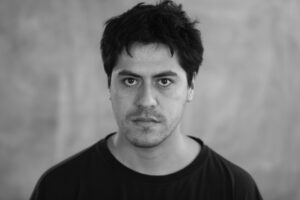
- Nicolás, in all of your films there are very defined elements of identity: nature or landscapes, on the one hand, and lone characters on the other. Why are these elements present in your films?
NM: I think that territory and connection with nature is something that I’m very interested in because, being a city man, I feel that there’s something missing that allows us to find zen or a connection when it comes time to put the mind on zero. That can be found in nature and in the daily relationship with it.
All my films have a bit of a tendency to look at that. Even though the gauchos have a connection to the territory, they travel to an entirely new place where, even if there are similar rules, there are things that are completely different. So seeing them react to this difference, with the abilities that they have, to me that was something very interesting to understand.
- There’s also a theme of identity in your films and of cultural mix. Is it conscious or did it arise in the process?
NM: I think it has arisen along the way and has turned into a point of view. That incorporation of certain elements that interest me, seeing them put in another place allows you to understand them better, it’s like the scientific method of isolating the phenomenon to investigate it.
- Poetry, humor, and something unknown is part of what the film offers the audience. It’s unknown stories and there's poetry to how you film the details.
NM: To me one of the most important things artistically is the rhythm, which is basically time and space. I think Gaucho Americano has a particular rhythm because it takes inspiration from the Western genre, but also from the cinema that I like to make, which is territorial cinema.
- Every great adventure needs good travel companions, or else the story seems to hobble a bit. Marcela, Chile’s first female producer nominated for an Oscar with The Mole Agent, in the case of your work with Nicolás, what motivates you to work as an executive producer in this case? What elements of Nicolás’s films do you identify with or are you mobilized by?
MS: I’ve known Nicolás for many years and we’ve obviously worked together on other films, but in this specific case, I love his cinema, I love the things he does, I love his point of view.
I think my labor as executive producer is essentially to have this cinema seen in the greatest number of places, it’s trying to make it global and also having the greatest number of people see it in Chile, because I think it’s a gem that needs to be seen. Since I’m a fan of his work, my labor as executive producer is essentially to make the fan club bigger. I’m on that mission!

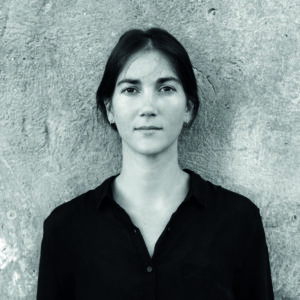
- Let’s go straight to the production. Josephine, what chord does it have to strike for you to bet on Nicolás?
JS: I think Nicolás has something very particular, he uses time very well and knows how to put his eye on places where in daily life you would take a long time to notice those details. Nico manages to very simply portray those little details that bring us to the intimacy of people or spaces in a very unique way.
I met Nicolás right when I got to Chile from France. I saw Flow and Los Castores, and in that moment I was enchanted, I had never seen documentaries like that. So when Nico told me about Gaucho Americano and about the next project that we’re doing together (Piriápolis), I felt very lucky to have the possibility to accompany him.
- Nicolás, what is the emotional journey that you hope for the spectator to have with this film?
I think there are many realities of survival and laboral realities that are somewhat obscured in Chile. The film portrays that in a very particular way, which at the same time mixes with the dream of the gauchos. Besides their work, the gauchos have a cultural relationship with gaucho literature, but also with the American Western. They dream of seeing the land of John Wayne and the film is also about having a gauchesco-Western language.
Through that emotionality, the gauchos have a lot of nostalgia for their land, but at the same time a lot of humor regarding the cultural friction.
- We could say that until now 2021 has been a golden year for documentary. The nomination of The Mole Agent to the Oscar, and Gaucho Americano in the official section at Hot Docs. What are the key elements for you two to have made this happen?
MS: Chilean documentary has a track record of many years, and has been expanding to have a higher and higher level of quality and also in terms of exploration. I think that has been happening a lot, people taking a bet on new proposals, new languages.
Essentially there’s a rise, you could say, but that is thanks to the steady build in previous years. I don’t think it’s a coincidence. I think it’s a buildup and a mix of many things. Cinema in Chile has been growing, and organisms like CinemaChile or Chiledoc are also promoting it.
JS: Chilean documentary is growing and it has been highly recognized abroad for a long time. In Europe as well, and I think that in recent years we have seen a multiplication of voices, of new points of view, and as Marcela says, of new cinematic proposals.