

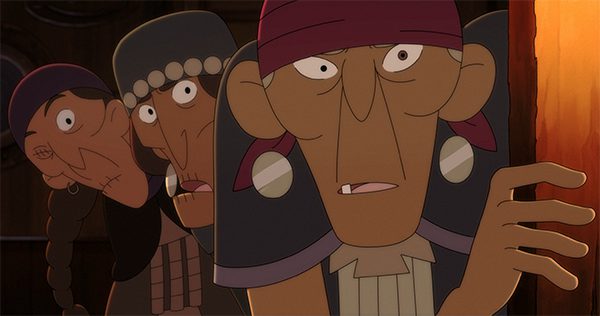
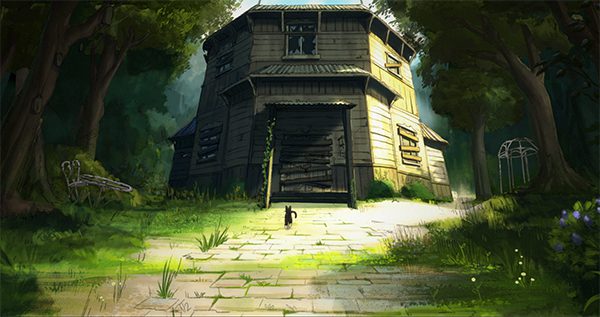
After five years of work and a long journey through laboratories and labs during its development stage, the animated feature film “Nahuel and the Magical Book”, directed by Germán Acuña from Carburadores has just premiered in the Official Competition of the Annecy International Festival. More than 100 people participated in the making of this film.
Nahuel and the Magical Book is a 2D animated feature film for children and family audiences, and is Acuña's first feature length film. The movie was produced by Carburadores (Chile) and Levante Films (Brazil), while the national production house Punkrobot participated as executive producer. Part of its financing is due to state subsidies from Chile and Brazil, such as the National Television Council Fund; the Audiovisual Fund and the Production Promotion Corporation (CORFO) and ANCINE Brazil.
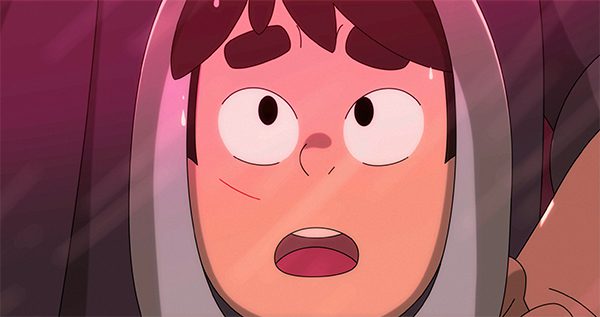
This movie mixes adventure, fantasy and chilote myths and tells the story of a 12-year-old boy who will have to face his deepest fears to rescue his father, who has been captured by a dark wizard. Here its director tells us new details about the film, the experience of having participated in Annecy and shares some thoughts about the development of animation in Chile.
-What did it mean to be selected for competition at the Annecy Festival after so many years of working with the film?
Being selected is a great recognition. We were in the Official Competition, which is the most important category of the festival; we were also the only Latin and Spanish-speaking feature film, so we had the great joy and responsibility of representing Ibero-American animation. It was a tremendous honor.
-How do you evaluate the participation in Annecy and what's next for the film?
We knew that winning the contest was difficult since we competed with great films. Still, our evaluation is very positive. We have had a tremendous feedback, reviews and very good interviews. The film has undoubtedly attracted attention for its production and theme. I think it was a surprise for many to see that this feature came from Latin America.
-Why do you think so?
The production was striking because in Latin America there are not many animated feature length films. 2D animation films are particularly difficult because within traditional animation it is one of the most artistically complex areas, since it depends on a traditional mechanism that is drawing. So the visual quality of the film was surprising, coming from a region that generally does not have many films that can be compared in that sense.
-How was the research process for the story that Nahuel builds and the magic book?
First, in 2012, I made a personal trip in which I dedicated myself to delving into the themes of Chilote mythology and culture. I had conversations with people of all kinds: merchants, fishermen, people from the municipality, even a professor specialized in mythology, who shared a lot of small local stories full of characters and magical situations that, at the same time, felt very familiar.
Then in 2015, when the project received its first development fund, we traveled with the art team. We spent a week generating a large image bank that would be the raw material for the subsequent visual development of the film. The research also considered lots of books and internet to complement it.
-Can you describe the main features of the artistic and creative process? What are your influences? How do you seek to differentiate yourself?
It is a collective process. For me, directing an animation film in Latin America is comparable to making a long journey on an artisanal boat. This has been a 5 year journey. There are highs and lows, stormy days, calm days, hard work days and fun days; And the role of the director is not to lose his way and to try to transmit security and enthusiasm to the team, who are the true driving force behind the projects. This is accomplished using various artistic tools such as drawing, writing, or verbal briefings.
Undoubtedly, a capable team is needed and we were blessed to be able to assemble a tremendous team of which we are very proud of. Our influences are varied, but we share a love for certain authors and works. I think that the value or novelty that Nahuel and the magical book comes to offer is not so much a complex or unknown narrative plot or structure, but rather very specific elements that can be identified in that plot: that the audiences get to identify themselves with a Chilean boy or a Mapuche girl, on the big screen, in an animated production with this level of production, seems to me like a nice triumph for our audiovisual and cultural history.
-How do you think the animation format, and specifically Nahuel and the magic book, generates stories both for children and adults? How are these reading layers generated that intersect and coexist at the same time?
Nahuel is a film for family audiences. That is to say, it mainly targets girls and boys but it is built so that parents can also connect with the story and, hopefully, generate a family conversation after watching the movie. We try to achieve this by building two plot lines running in parallel. On the one hand, there is the whole adventure of Nahuel: rescuing his father (who has been captured by a warlock) with the help of a magic book. This is the most "pyrotechnic" part of the film, where the fantastic elements appear; but within that plot, you also have the relationship of a father with his son. A relationship that is marked by a traumatic family event.
Overcoming fears is the central theme that unites these two plots. It is a film that also speaks about the parental role, which in cultures such as Latin is more associated with a rather severe role model, sometimes stripped of emotional elements. There is a little reflection on that too. So while the film displays many elements that can be classified as localists, the story and themes are quite universal: family relationships and overcoming fears.
-What opportunities do animation productions have in the midst of the pandemic? Has there been more interest in streaming platforms to acquire animation? What about national channels?
The pandemic has had a particularly hard impact on the economies related to culture: filming, theater, concerts, cinema in theaters, street art are very directly suffering the impact. On the other hand, confinement has shown us how important art is to our lives, it has helped us to stay sane these days, right?
Animation now has the small advantage of being a craft that can be developed from home. In our case, as soon as we saw how hard things would be, we decided to move to telework prioritizing the health of our people. And we have managed to continue producing without major problems, in spite of the contingency.
There is not much that can be said about national broadcasters; there is no strategic or coordinated effort to make the national audiovisual industry dynamic, at least not as in other countries where national broadcasters play a central role in their local culture.
 -In a recent publication, Variety emphasis the great growth of animation in Chile in recent years. How do you think this growth has been possible as well as the high level that has been achieved?
Indeed, Chilean animation is generating more news every year and conquering more successes. Personally I associate it with many things, but mainly I see a very determined sector, committed to its craft, as the main driving force for this. I believe that although in Chile we are in a better situation than other countries in the region in terms of support, there is undoubtedly a lack of strategic vision and determination to definitively lift the creative industries to become a much more robust contribution to the country's economy. .
-What is being taught in Chile about animation? What is missing academically?
Without being an expert on the subject, since I have not been in the teaching world for many years, I think that raising the technical level is an important need, although each year better generations of animators come out. I would love to see a public university open a school with a more industrial look, focused on the quality of the craft as the first objective.
-How is in Latin America working to join forces in animation?
One of the things I like the most about our sector is the cooperativeness that exists. In general, at festivals and markets you realize that there is very little ego and glamour, that you can get up close and personal with a top Pixar director, for example, and that the guy is probably going to be very cool and simple. It seems to me that in general the world of animation has that differential. This is particularly noticeable in Latin America with our "warm" culture.
There are many important instances that have helped to create a network, festivals like Chilemonos, Pixelatl, Animaperú or instances like Animation! from Ventana Sur and the Quirino Awards. Many instances of joint work have been generated, which I believe is essential. Latin America has two great advantages: we share a language and many cultural elements, which potentially makes us a very interesting market. This is why it is essential to establish a financing model that allows several countries in the region to co-produce with relatively similar conditions. Personally, I look with great interest at how they do it in Europe. I know that they are countries with another reality and budget, but behind that, there is a simple idea: to coordinate resources to produce, in this way everyone wins and there is an important intellectual and technological transfer. I hope to be able to build a financing network of this type with our next feature.
-What are your next projects?
We are working on a second feature film called La veta del Diablo. Set in the north of Chile, in the 1920s, when the salitre was a main source of mineral exploitation. We hope it will be a co-production between at least three countries this time.